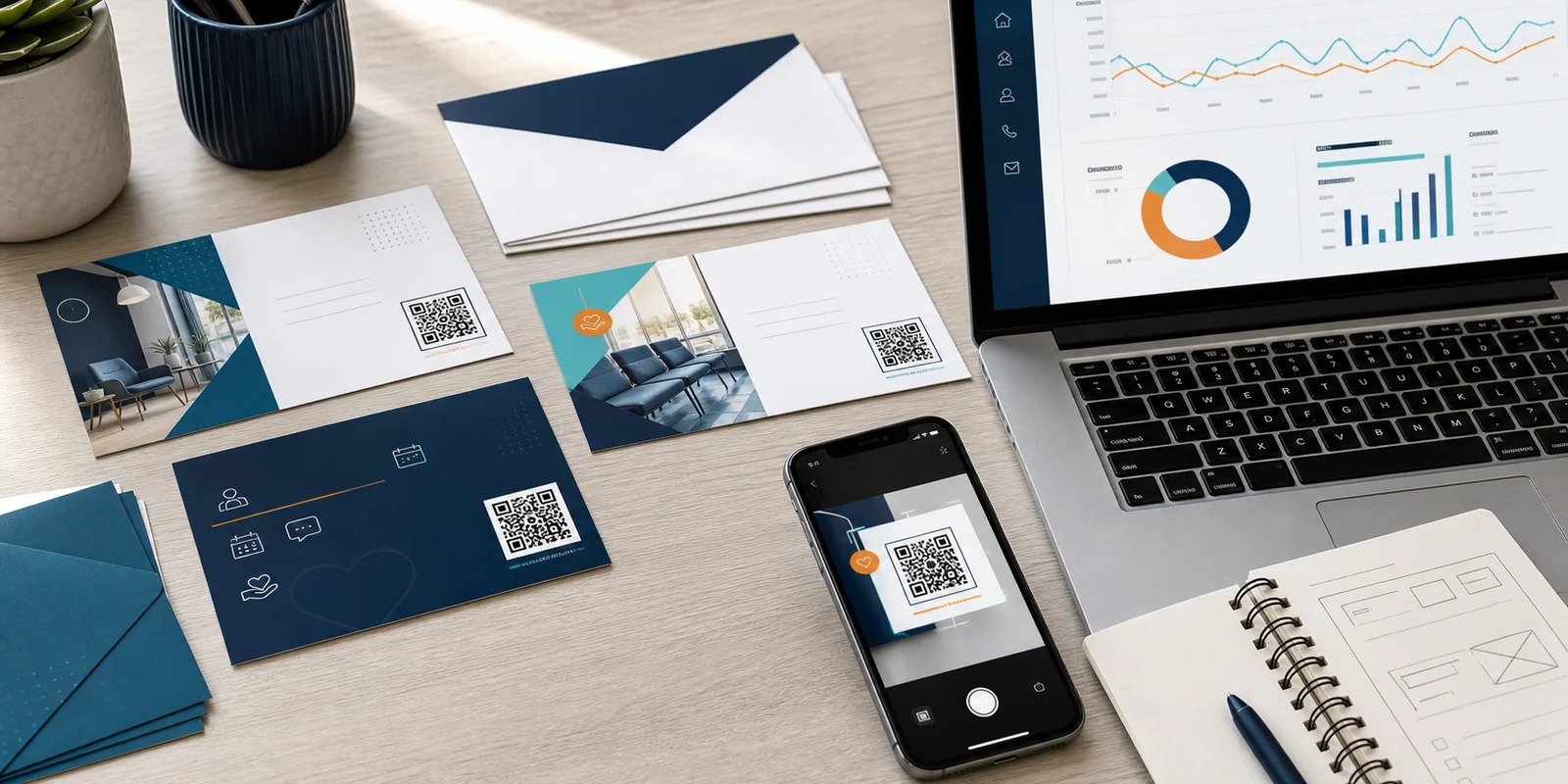
Direct mail can become part of a measurable workflow
A postcard does not have to be a generic mass mailing. Print APIs can merge recipient and neighborhood information into a template, create a unique QR code and send each person to a relevant page. The practice can then connect the scan, form submission or scheduled conversation to the original campaign.
This works best when the mailpiece has one clear purpose. A local practice might introduce a membership model, a new service, an open house or a simple patient-access benefit. The postcard earns attention, while the landing page provides the detail and next action.
Personalization should be useful, not unsettling
Name and local context can make a message feel relevant. Excessive detail can make it feel invasive. For prospective-patient outreach, use lawfully obtained business or consumer data and avoid any language that implies knowledge of a diagnosis, treatment need or confidential relationship.
For communications to existing patients, the practice must distinguish permitted treatment or operational communication from marketing and respect requests for confidential communication. HHS specifically notes that a patient may reasonably request a closed envelope instead of a postcard.
Build attribution into every mailpiece
A recipient-specific QR code or short URL can identify the campaign and recipient record without displaying private information in the URL. UTM parameters can preserve the source and campaign in analytics, while the CRM records the scan and any later conversion.
Print-mail platforms can render dynamic merge variables and unique QR destinations. The practice should test every variable, redirect, mobile page and fallback code before a batch is released. A scan event is a signal of interest, not proof of identity or consent to contact through every channel.
- Use one message and one primary action per mailpiece.
- Keep sensitive information off postcards and visible URLs.
- Use a random recipient code rather than a name or email address in the QR destination.
- Track scans, scheduled calls and qualified responses separately.
Test the complete recipient experience
The campaign is not finished when the postcard is printed. Review the delivery window, mobile landing page, personalized greeting, scheduling path, follow-up timing and CRM status changes as one experience.
Begin with a small, representative batch and compare message, audience and response quality. The useful metric is not the cheapest postcard. It is the cost of generating a relevant conversation while protecting the practice's reputation.