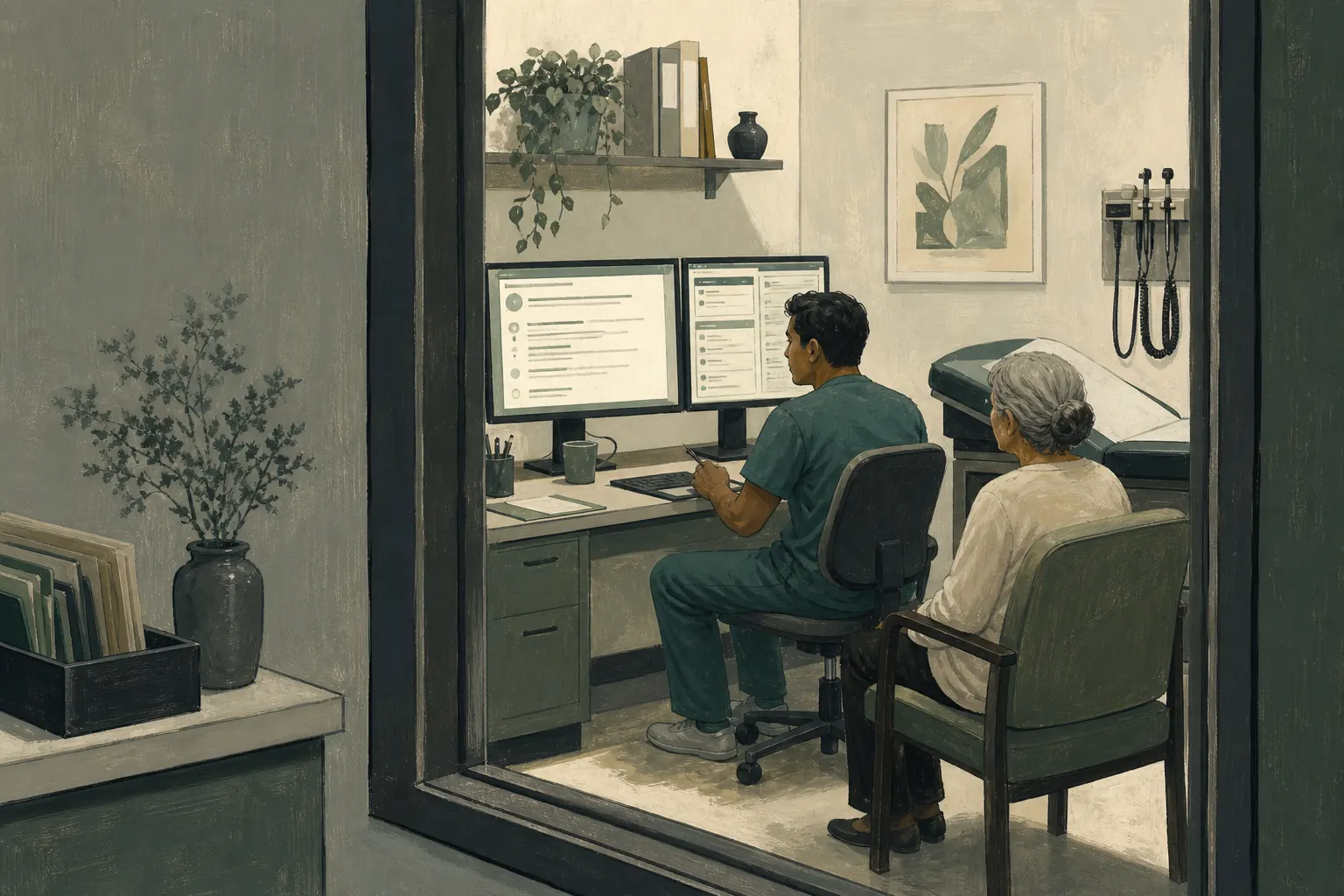
The problem is not a lack of data, but the time required to assemble it
A clinician preparing for a complex visit may need to search years of notes, medications, laboratory results, imaging, procedures and outside documents. Amazon Connect Health patient insights is designed to synthesize those longitudinal sources into a focused pre-visit summary based on the reason for the encounter.
AWS describes summaries that emphasize different information for different visits. A wellness visit can prioritize preventive care and immunizations, while a surgical follow-up can emphasize procedure history and postoperative notes. The practical goal is a shorter path to relevant context, not a generic chart summary.
Evidence links are the most important design choice
AWS says every clinical statement in a patient-insights output includes references to the FHIR resource or source document behind it. That gives an application developer the ability to let a clinician inspect the evidence instead of accepting a polished paragraph on trust.
For a medical practice, traceability should be a minimum requirement. A useful summary must help the clinician move from statement to source quickly, distinguish current information from old information and make missing or conflicting data visible. The goal is to reduce retrieval time while preserving clinical verification.
The workflow requires a data and application layer
Patient insights is an asynchronous service. An application submits a job with patient, encounter and clinician context, retrieves data from a FHIR store such as AWS HealthLake plus documents in FHIR or Amazon S3, and then receives a structured JSON output in S3. AWS says a typical job completes in approximately two to five minutes depending on the record.
That means the practice still needs software that requests the summary at the right time, renders it inside the user's workflow, displays evidence links, controls access and handles incomplete jobs. The service does not by itself create a polished EHR experience. Integration design determines whether the summary saves time or becomes another screen.
Preview status sets a clear boundary
Patient insights remains in preview in the supported US East and US West AWS regions. AWS's user guide explicitly says not to use preview features in production environments. The appropriate current use is technical evaluation, workflow design and controlled testing with approved data under the organization's AWS and privacy controls.
A practice should build a representative evaluation set across specialties, visit types and record complexity. Clinicians should rate relevance, omissions, unsupported statements, time saved and time spent verifying. Test recent outside documents, duplicate records, conflicting medication lists, scanned files and patients with limited history.
What to watch as the capability matures
The opportunity is larger than a one-time summary. Evidence-linked patient context could support visit preparation, ambient documentation, care-gap review, coding and follow-up in one encounter-centered workflow. The risk is allowing an incomplete synthesis to become the clinician's entire view of the chart.
Practices should watch for general availability, final pricing, supported input limits, performance by specialty, EHR integrations and tools for measuring summary quality. The best implementation will make source review faster, not make the underlying record disappear.
- Treat preview as evaluation, not a production commitment.
- Show evidence links beside each material clinical statement.
- Measure omissions and verification burden, not only readability.
- Trigger the summary early enough to fit visit preparation.
- Keep the full chart available when the summary is incomplete.