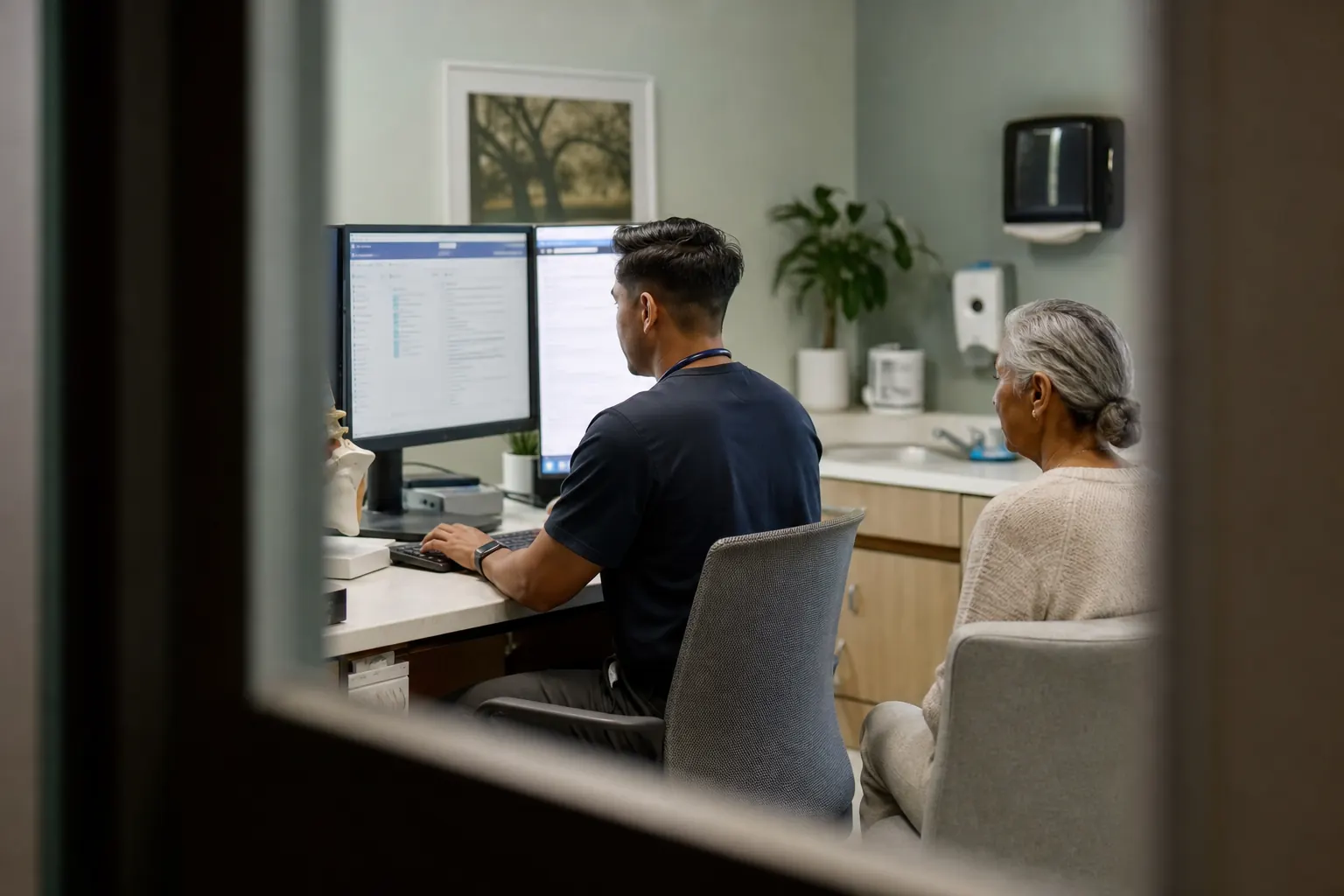
Why the clinical inbox is becoming an AI target
Portal messages, chart review, patient instructions and translation are high-volume writing tasks that often sit between clinical care and administration. The AMA's 2026 physician survey found active use across chart summaries, patient-message drafts, instructions and translation, with physicians expecting substantial additional adoption. These workflows are attractive because AI can prepare a draft while a person remains responsible for the response.
The goal should not be to send more messages automatically. It should be to reduce the time clinicians spend gathering context and composing routine communication while improving consistency, readability and routing.
What is available in the market
ChatGPT for Healthcare is an organization-managed workspace that can support chart summaries, administrative drafts and patient instructions when deployed under the appropriate enterprise controls and data arrangements. ChatGPT for Clinicians adds clinician-specific research and writing workflows for verified U.S. clinicians. OpenAI's AdventHealth case study describes structured chart summaries and initial administrative rationales as deployed use cases.
Ambient platforms are also moving downstream from the visit. Abridge describes patient summaries and follow-up work connected to the encounter. Suki includes patient instructions alongside documentation, orders and coding. Microsoft Dragon Copilot supports prompts, transcript queries and content creation around the patient session. EHR-native tools may have the strongest advantage when they can safely retrieve the right chart context and return the draft to the existing inbox.
Where review matters most
A portal reply can contain clinical advice, scheduling information, medication instructions or reassurance. A polished draft may still use the wrong patient context, miss urgency or promise an action the practice cannot complete. For that reason, start with clinician-reviewed drafting and classification. Do not enable unsupervised sending merely because the system performs well on routine examples.
Create categories with different controls: administrative messages, refill requests, results, symptoms, post-procedure concerns and urgent language. Define who reviews each category, how quickly it must be handled and what happens when the model is uncertain. Translation should receive additional clinical and language review when medication, consent or urgent symptoms are involved.
- Keep the original message and supporting chart context visible beside the draft.
- Measure time to final response, edits, rerouting, escalation and patient complaints.
- Use approved templates for tone, instructions and emergency language.
- Prevent consumer AI accounts from receiving protected patient information.
What to watch next
The market is moving toward a continuous clinical context that supports pre-visit summaries, the encounter, the inbox and follow-up. Patient-facing AI will also influence what arrives in the portal as people connect records and wellness data to consumer health assistants. Practices should expect more organized but more complex patient questions.
The positive opportunity is a better-prepared clinical team and clearer patient communication. The control point is traceability: staff should know which record elements informed a summary or draft and be able to verify the source before sending.